
Have you ever wondered why tracking work progress or general employee activity in the company has become such a hot topic for modern leadership these days? When your teams transitioned to remote or hybrid work setups back in 2020, managing workflows across different locations brought you a certain degree of operational anxiety.
For many companies, even right now, the go-to solution is installing comprehensive productivity tracking software. Of course, these digital tools are highly practical, efficient, and incredibly convenient when it comes to streamlining business operations across a large enterprise.
However, there is a catch here. Whether an organization relies on top-tier automation or prefers a different (manual) path, one reality remains unchanged: you simply cannot forego employee monitoring if you want to protect your bottom line and business interests.
If you look at some workplace insights from a global analysis by ExpressVPN, tracking tools do offer clear operational data; a significant 59% of employees still note increased pressure when monitoring feels continuous. This means that the implementation style truly matters.
So what do you think? Managing your organizational performance successfully is all about how you approach the data, right? We can all agree on that. For your CEOs, CFOs, CTOs, and HR leaders, the ultimate goal isn't just watching those recorded screens. It is ensuring steady business growth and achieving deadlines on time.
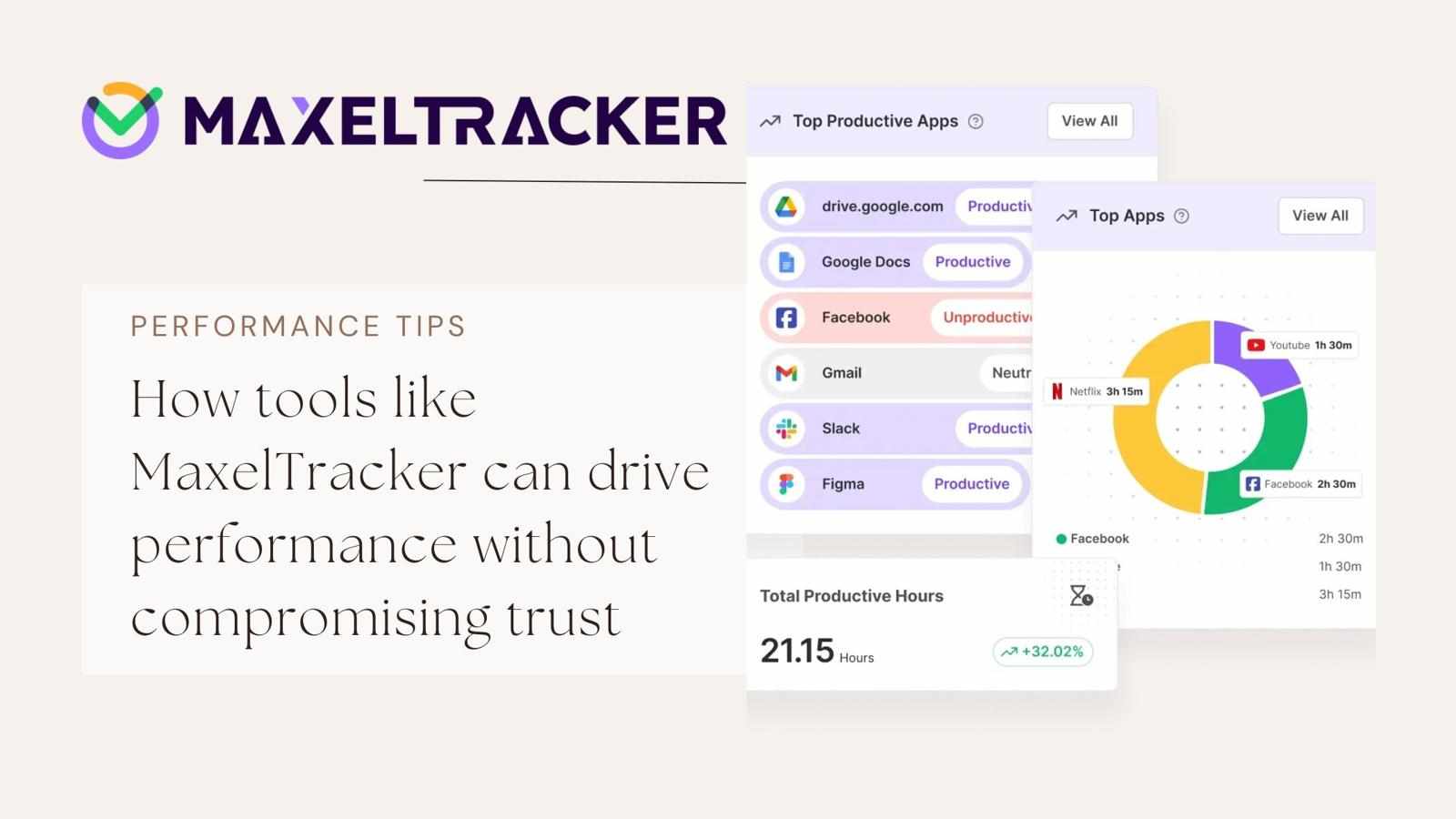
Whether you have a full suite of time tracking tools and software such as MaxelTracker active or are running an entirely manual setup, establishing a practical framework that focuses on your team’s output, accountability, and clear milestones is the only way to keep them moving fast and forward.
4 Areas Of Employee Tracking Software That Might Be Incomplete Without Human Intervention
Understanding the Metrics on Your Dashboard
Automated platforms offer a highly structured way to see exactly what is happening throughout the workday. And yes, automation is incredibly useful when it comes to capturing broad operational trends. However, there is a significant involvement of the human element too. This blog is for every business out there that wants to establish a human-centric and human-powered manual setup to monitor their employees and keep an eye on their work.
Balancing Idle Time Tracking with Real Focus
Have you ever thought about the limits of automated logs? Features like idle time tracking are excellent for spotting extreme disengagement, but they can occasionally misinterpret deep thinking. Highly strategic tasks—such as planning an engineering project, writing complex code, or auditing a financial sheet—require extended periods of quiet reflection. If an algorithm only flags mouse movement, a manager might miss the fact that an employee is actually deep in a problem-solving session. Is it weird? Well, it does happen in many companies, to be honest. Combining software data with an understanding of deep focus ensures that you get an accurate picture.
Getting the Most out of Live Screen Monitoring
Similarly, features like live screen monitoring provide concrete verification of daily tasks. It offers quick visibility for remote management. But remember, if your employees feel over-scrutinized, they might shift their focus from high-value tasks to simply ensuring their screens always look perfectly active. The trick is to use these visual tools as a high-level support mechanism rather than a tool for micro-appraisal, keeping the focus entirely on real quality work. You can’t just abdicate the responsibility of analyzing the visual evidence and feeds. You have to be present there to understand what happens throughout the day.
Managing Data Responsibilities
For CTOs and legal teams, running automated capture systems also means handling data security with care. Because software tools can indiscriminately log whatever is displayed, systems can end up holding sensitive client data, internal financial statements, or personal employee details. This is so risky, and you would agree that if proper safeguards aren't in place, it can spell a lot of trouble for your reputation.
The Blueprint: 7 Pillars to Monitor and Manage Work (With or Without Software)
Don’t you want to know how to build an airtight workflow management system that works in any scenario? Give it more than just a thought, I’ll say—whether you are maximizing your current team productivity tracking or building a software-free backup plan, these 7 pillars keep your operations perfectly visible.
Pillar 1: Define "Done" with Sharp Objectives (KPIs)
Focus on the Milestones: You have to set crystal clear delivery goals for everyone. If a team member hits their targets early, that is an efficiency win for them. This also shows that the system is working exactly how it is meant to.
Use Clear OKRs: Connect daily tasks straight to company revenue and growth goals. And also make sure everyone knows their exact target.
Set Firm Standards: Establish unambiguous quality standards and guidelines from day one. When expectations are completely clear from your end, tracking the final result becomes simple and objective.
Pillar 2: Establish Transparent Self-Reporting
Simple Written Updates: You can use text-based digests on platforms like Slack or Teams along with a tool like MaxelTracker. Let your employees share quick points on their daily wins, next priorities, and active blockers to keep communication going.
Visual Project Boards: Popular and efficient workflow tools can be used to map project phases. Be sure to do that so that your leadership can check their operational health at a glance without interrupting anyone.
Pillar 3: Utilize Strategic, Focused Time Checks
The Two-Week Window: If you don't use continuous tracking software, ask your team to manually note down their activities in broad blocks for just a 14-day period twice a year.
Find and Kill Clutter: Use quick sample data to uncover operational friction, like redundant meetings or slow approval chains. This is absolutely necessary for clean resource allocation.
Optimize Schedules: Repurpose those cleared hours back into productive project windows.
Pillar 4: Monitor Overall Team Delivery Velocity
Watch the Momentum: Track how smoothly and consistently your teams deliver project phases over weeks or months.
Spot Long-Term Bottlenecks: A sudden drop in team speed is an indicator of system issues or low resources, allowing you to step in proactively.
Look at the Big Picture: When macro-level velocity is high, it gives managers total peace of mind regarding the team's daily effort.
Pillar 5: Cultivate Meaningful Feedback Loops
Diagnostic 1:1 Check-ins: Keep regular individual meetings highly functional. Use them as diagnostic tools to discuss goals and clear away roadblocks rather than just reading off status lists.
Catch Exhaustion Early: Use private chats to spot stressed employees. Don’t forget to do this to protect retention, as high-performing talent often overworks behind the scenes.
Align Career Paths: Connect daily tasks to long-term professional development to keep the morale of the team high.
Pillar 6: Encourage Task Ownership and Independence
Provide More Flexibility: Give your employees more reasonable control over how they structure their day. It builds incredible comfort and ownership.
Celebrate Process Innovation: Praise those employees who find clever and faster ways to streamline workflows and/or automate repetitive manual tasks.
Reward True Efficiency: Avoid pushing fast and high-quality work onto employees who have finished their task lists on or before time. Remember to reward them first.
Pillar 7: Anchor the System in Structural Trust
Make it Safe to Speak Up: You must create an environment in the office where your teams can flag mistakes, delays, or challenges honestly. Early reporting of such issues keeps minor issues from turning into major client emergencies.
Drive Exceptional Alignment: When everyone understands the big vision, all your autonomous teams move cohesively without calling for aggressive oversight.
Capture the Trust Dividend: High-trust workplaces see lower operational stress, smoother collaboration, and retention of premium talent consistently.
The Real Bottom Line
At the end of the day, tracking performance is non-negotiable. It is a part of running a successful enterprise. Your competitors are doing it, and automated tracking systems are undeniably a highly convenient and practical way to keep a company organized.
But whether you choose a high-tech software solution or build a manual framework, the underlying principles of great management never change. Data published in a landmark hybrid work study by Stanford economist Nicholas Bloom in Nature shows that giving teams clear metrics and structural flexibility keeps performance levels high while cutting resignation rates by 33%. Hasn’t it ever gotten you curious about how much more efficient your workflow could be if you blended great tracking with clear output goals?
But who can do that and expect great results without a clear strategy? No matter what software you use, whether it’s MaxelTracker or some other smart tool, the smart move here is to focus entirely on clear objectives. It is time to ensure more transparency and accountability, and also measurable business outputs. By combining the convenience of modern activity tracking and a rock-solid, output-focused culture, you can build an agile and high-trust organization primed for long-term success.


Write a comment ...